Most Indian SMB founders asking whether they need a DPO DPDPA India hire are being sold a statutory officer they do not yet owe. The Digital Personal Data Protection Act, 2023 wants a named Section 8(9) contact now, and a Board-reporting Data Protection Officer only after Section 10 notifies you.
TL;DR
- A DPO DPDPA India appointment — an India-based Data Protection Officer who represents the entity and is responsible to the Board — is a Section 10(2)(a) duty. It switches on only after the Central Government notifies you, or your class, as a Significant Data Fiduciary (SDF).
- Ordinary Data Fiduciaries still owe Sections 4–9 and 11–14 in full by 13 May 2027. Skipping baseline because “we don’t have a DPO” is the other failure mode.
- What you need now is a published Section 8(9) contact, read with Rule 9 of the DPDP Rules, 2025, plus Section 8(10) grievance redressal — not a job title copied from a GDPR org chart.
- Buying “DPO-as-a-service” before notification is theatre. Software is not your DPO, and it is not your Section 10(2)(b) independent data auditor.
- Penalty ceilings sit in the Schedule: ₹250 crore for Section 8(5) security failures; ₹200 crore for Section 8(6) breach-intimation failures; ₹150 crore for additional Section 10 SDF duties. The Data Protection Board of India (DPB) applies these on facts.
Do we need a DPO DPDPA India appointment before 13 May 2027?
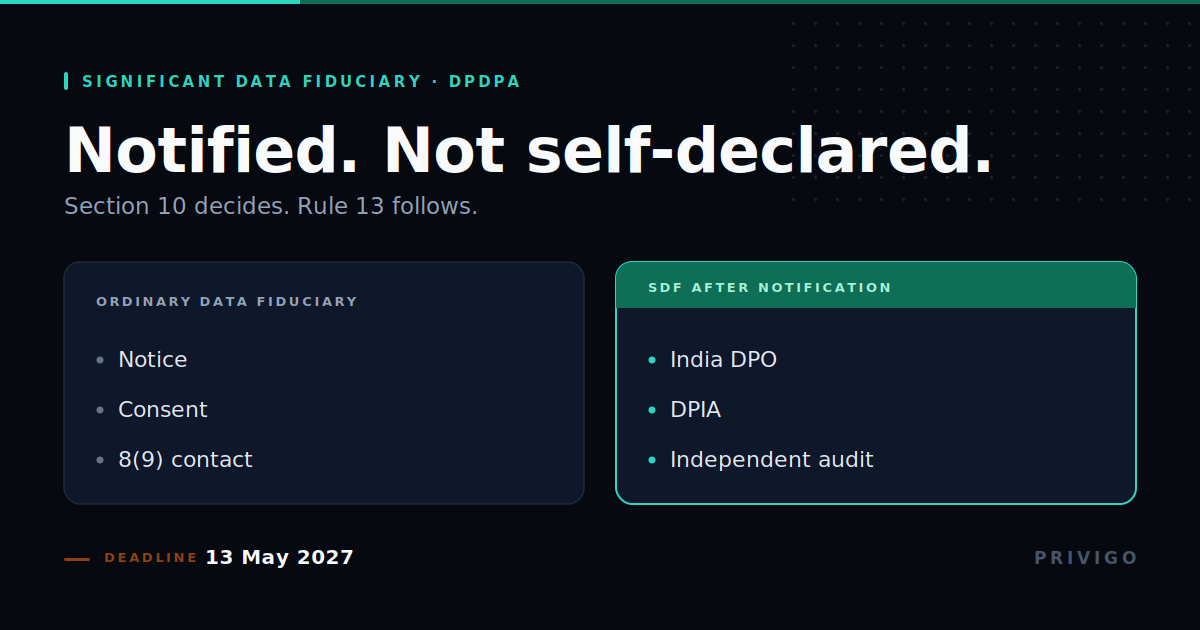
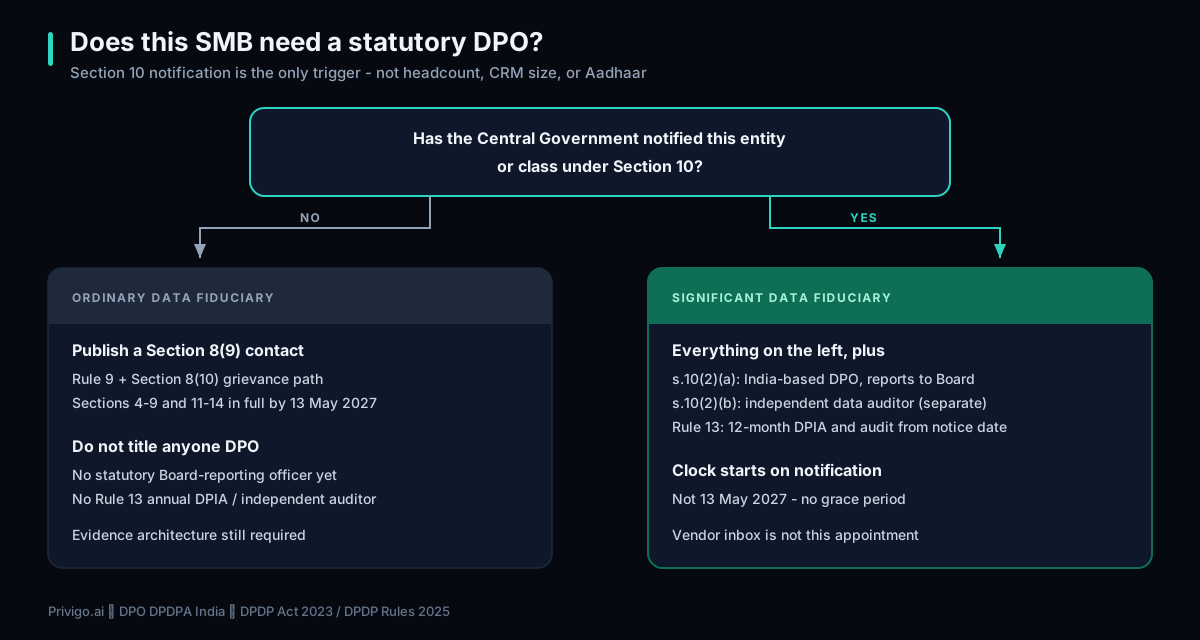
No. The Act answers with a binary, not a headcount. If the Central Government has not notified your entity or class under Section 10, you are an ordinary Data Fiduciary. Digital personal data already puts you in that seat under Section 2(i). What you do not have is the extra SDF stack: India-based DPO, independent data auditor, and Rule 13 twelve-month DPIA and audit.
As at 25 September 2026, no Data Fiduciary or class of Data Fiduciaries has been notified as an SDF under Section 10. Headcount, revenue, CRM size, and “we hold Aadhaar” do not self-convert you. The DPDPA does not revive the old SPDI “sensitive personal data” category; Section 2(t) is one category of personal data. Health files and salary files do not create a DPO duty by themselves.
The notification trigger, and what Rule 13 adds after it, is in Significant Data Fiduciary under DPDPA. This piece is the demo-objection version: who you name, what you must not title them, and what to build instead of a retainer.
Substantive duties under the DPDP Rules, 2025 (G.S.R. 846(E)) phase in on 13 May 2027. The DPO clock, if it ever starts, runs from the notification date — not from 13 May 2027, and not from the date you signed a vendor SOW.
How is the Section 8(9) contact different from a Data Protection Officer?
Every Data Fiduciary must publish the business contact of a person who can answer a Data Principal’s questions about processing — Section 8(9), read with Rule 9 — and run grievance redressal under Section 8(10). That person can be the founder, ops lead, or HR head. They do not have to report to the Board. They do have to be real: an inbox that is read, and a path that can take a correction request.
The Section 10(2)(a) DPO is a different job: based in India, representing the SDF under the Act, and responsible to the Board of Directors or similar governing body. Different appointment, different reporting line, different accountability.
| Role | Who it is | When it applies | What “done” looks like |
|---|---|---|---|
| Section 8(9) contact (Rule 9) | Named founder, ops, or HR lead who can answer processing questions | Every Data Fiduciary | Published business contact; replies land with a person, not a no-reply alias |
| Section 8(10) grievance owner | Same person or a named deputy | Every Data Fiduciary | Working redressal path; Rule 14(3) 90 days is a ceiling, not a service-level target |
| Section 10(2)(a) DPO | India-based individual representing the SDF, responsible to the Board | Only after Section 10 notification | Board-visible appointment; not a vendor slide |
| Section 10(2)(b) independent data auditor | Separate person from the DPO | Only after Section 10 notification | Evaluates compliance; software does not hold this office |
| Rule 13 DPIA / audit | People using evidence from the system of record | Only after Section 10 notification | Twelve-month clock from the notice date; Rule 13(2) Board report of significant observations |
Calling the Section 8(9) contact “DPO” before notification is the usual unforced error. It does not make you SDF-ready. It creates a paper trail that you accepted an SDF duty the Gazette has not given you.
HR heads hit a second mix-up: employee data. Processing necessary for employment can sit under Section 7(i). Optional uses still need Section 6 consent: free, specific, informed, unconditional, unambiguous, by clear affirmative action. Neither ground manufactures a DPO. Detail: DPDPA employee data: consent, notice, HR compliance.
Can an SMB buy DPO-as-a-service and call it done?
No. A retainer does not discharge Section 8, appoint a statutory DPO, or replace processor contracts, reconstructable consent, or a breach log. The Act did not copy GDPR’s default DPO trigger. A PDF titled “DPO appointment” fails the first real question: for this customer, on this day, which notice, which purposes, who exported the file, when was it erased?
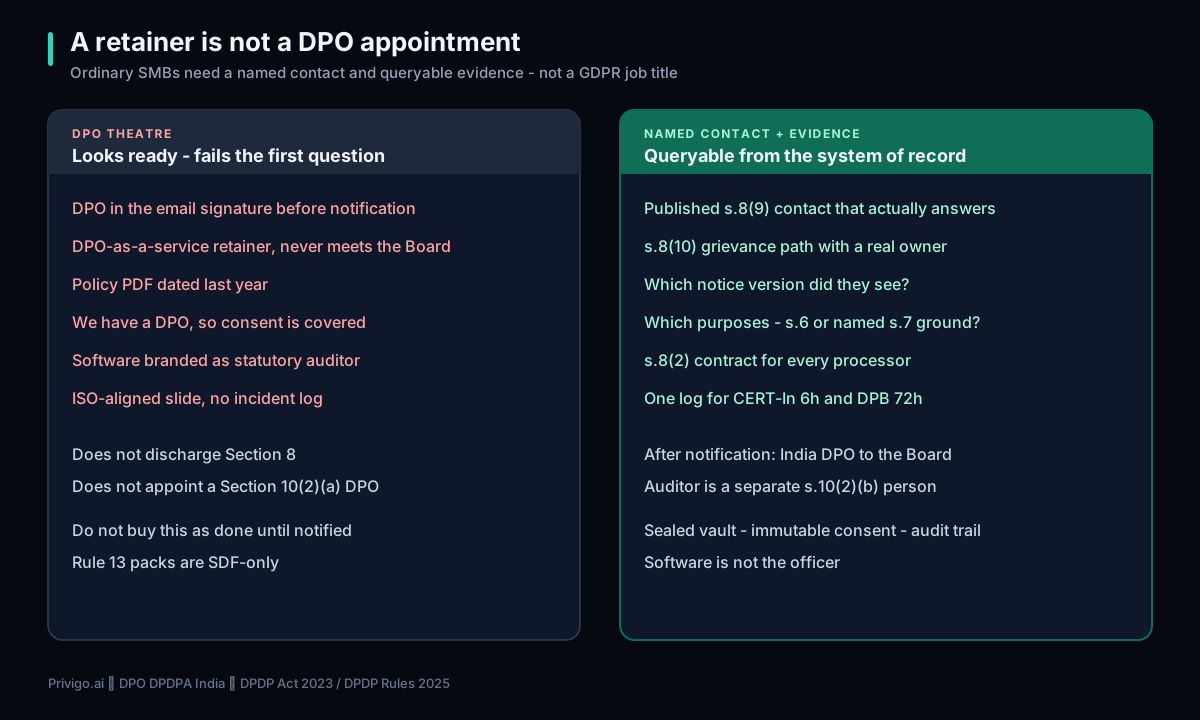
| Theatre (do not buy this as “done”) | What the Act actually asks an ordinary SMB |
|---|---|
| ”DPO” in an email signature before Section 10 notifies you | Published Section 8(9) contact that can answer, read with Rule 9 |
| Outsourced inbox that never meets the Board | After notification: India-based DPO responsible to the Board (Section 10(2)(a)) |
| “We have a DPO, so consent is covered” | Section 6 consent or a named Section 7 legitimate use, reconstructable under Section 6(10) |
| Software branded as your statutory auditor | Section 8(2) processor contracts; independent auditor only after notification |
| ISO-aligned slide, no incident log | One log that can feed CERT-In (6 hours) and the Board (Rule 7, 72 hours) |
After notification, Section 10(2)(a) still describes a person, not a product. The Act does not ban an external appointment in those words. Whether a part-time external DPO satisfies Section 10(2)(a) on your facts is a counsel call. What it does not describe is a vendor inbox that never reports to the Board. Do not treat a pre-notification retainer as the appointment.
The architecture argument holds whether or not a DPO ever appears: identifying data sealed and tokenised (aligned to Rule 6(1)), consent records append-only, an audit trail an outsider can inspect. That is the Privigo platform claim. It is not a claim that software is your DPO. Role-level checklist: DPDPA checklist for Data Protection Officers.
What extra does a notified SDF DPO actually have to do?
Once the Gazette names you, Section 10(2) adds; it does not replace the baseline. The DPO represents the SDF, sits in India, and is responsible to the Board. The independent data auditor is a different person under Section 10(2)(b). Rule 13 is the prescribed extras: DPIA and audit every twelve months from the notification date, a Rule 13(2) Board report of significant observations, Rule 13(3) algorithmic due diligence, and any Rule 13(4) specified-data transfer restriction. Cross-border inventory itself is not SDF-only — Rule 15 applies to every Data Fiduciary.
Do not put the DPO under Rule 13. The officer is Section 10(2)(a). Mixing those is how an SMB buys an “annual DPO audit pack” it does not owe. Notification does not grant a grace period until 13 May 2027. Until it lands, do not title anyone DPO solely to look ready.
What should an SMB founder put in the Board pack this quarter?
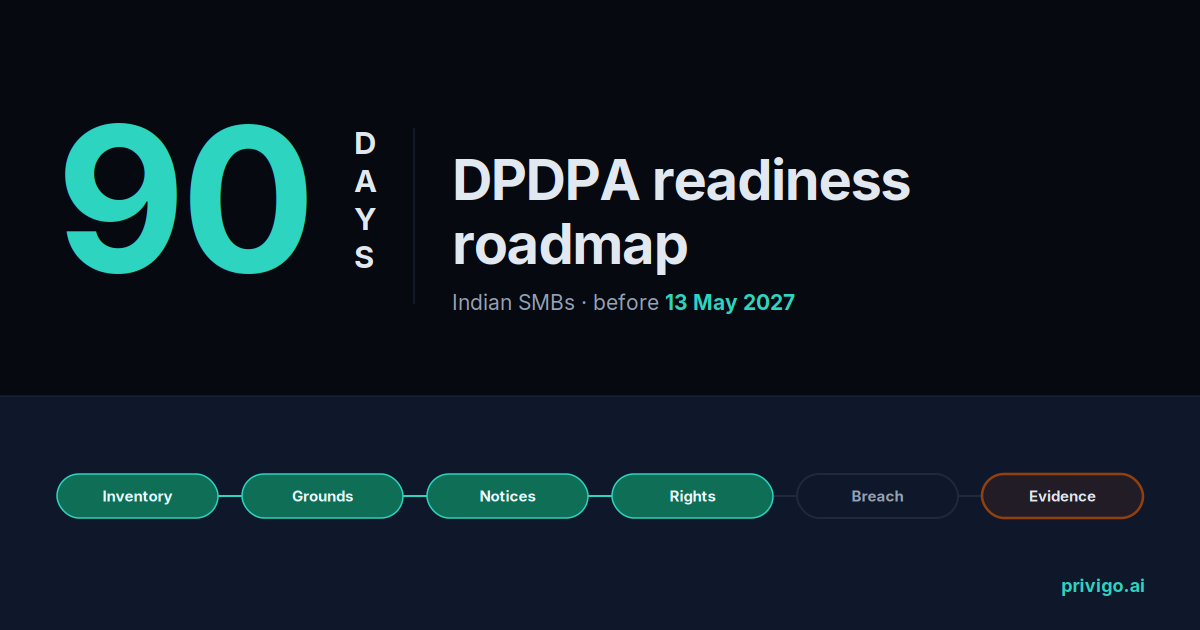
The Board needs a status the founder can sign. Use the 90-day DPDPA readiness roadmap for fortnightly windows; this table is the DPO-shaped cut.
| Area | Owner | Status ☐ |
|---|---|---|
| Confirm SDF status by watching Gazette / MeitY Section 10 notices — do not self-score from headcount | Founder / CEO | ☐ |
| Named, published Section 8(9) contact, read with Rule 9 (not titled DPO unless notified) | Ops lead | ☐ |
| Section 8(10) grievance path with a real owner and a clock | Ops / HR | ☐ |
| Purpose map: customers, employees (Section 7(i) where necessary), vendors | Ops + HR | ☐ |
| Processor contract pack (Section 8(2)) for every vendor touching personal data | Legal / counsel | ☐ |
| Consent / notice reconstructability (Sections 5, 6, 6(10)) | Product / eng | ☐ |
| Saturday dual-clock drill: CERT-In 6h + DPB 72h | Security / founder | ☐ |
| Do not buy a DPO retainer or Rule 13 pack unless and until notified | Finance | ☐ |
If notification lands, add the India-based DPO, the independent data auditor, and the twelve-month DPIA and audit — clock from the notice date. Build the evidence architecture now; the Board asks for it either way.
What should an Indian SMB do this month instead of hiring a DPO?
Three moves, in order:
- Write the binary on one page — “We are / are not a notified SDF as of [date], last Gazette check [date]. Our Section 8(9) contact is [name], and we have not titled that person DPO.” Put it in the Board pack. Do not let a vendor slide replace that sentence.
- Make the published contact real — one inbox, one owner, one path for access, correction, erasure, and grievance. Close one processor-contract gap the same week.
- Rehearse the dual clock — 6 hours to CERT-In, 72 hours to the Board. A named contact who has never run that drill is still theatre.
Book a 30-minute DPDPA discovery call →
Sources
- Digital Personal Data Protection Act, 2023 (Act No. 22 of 2023), MeitY — Sections 2, 6–10, 33 and the Schedule: https://www.meity.gov.in/static/uploads/2024/06/2bf1f0e9f04e6fb4f8fef35e82c42aa5.pdf
- Digital Personal Data Protection Rules, 2025, G.S.R. 846(E), MeitY — Rules 6, 7, 9, 13, 14, 15: https://www.meity.gov.in/static/uploads/2025/11/53450e6e5dc0bfa85ebd78686cadad39.pdf
- DPDP Act commencement, G.S.R. 843(E), 13 November 2025, MeitY: https://www.meity.gov.in/static/uploads/2025/11/c56ceae6c383460ca69577428d36828b.pdf
- Press Information Bureau — Digital Personal Data Protection (DPDP) Rules, 2025: https://www.pib.gov.in/PressReleasePage.aspx?PRID=2190014
- CERT-In — Directions under section 70B(6) of the IT Act, 2000, No. 20(3)/2022-CERT-In, 28 April 2022: https://www.cert-in.org.in/PDF/CERT-In_Directions_70B_28.04.2022.pdf
This article is operational commentary for Indian SMB founders, ops leads, and HR heads, not legal advice and not a determination of whether any named entity is or will be a Significant Data Fiduciary or must appoint a Data Protection Officer. Confirm positions with qualified Indian counsel.
FAQ
Does every Indian SMB need a Data Protection Officer under DPDPA?
No. The India-based Data Protection Officer who reports to the Board is a Section 10(2)(a) duty that starts only after the Central Government notifies you as a Significant Data Fiduciary. Ordinary Data Fiduciaries still publish a Section 8(9) contact, read with Rule 9, and run Section 8(10) grievance redressal.
Is the person named on our privacy page already a DPO under DPDPA?
No. A published Section 8(9) contact — an ops lead, founder, or HR head who can answer processing questions — is not a Section 10(2) Data Protection Officer. Titling that person DPO before notification creates a paper trail of an SDF duty you have not been given.
Can we buy DPO-as-a-service and skip the rest of DPDPA?
No. A retainer does not create a statutory DPO duty and does not discharge Sections 4 to 9 or 11 to 14. After a Section 10 notification, Section 10(2)(a) requires an India-based individual who represents the Significant Data Fiduciary and is responsible to the Board — a vendor inbox is not that appointment.
When does the DPO duty start if our SMB is notified as an SDF?
The Section 10(2)(a) DPO duty starts on the date of notification. There is no grace period until 13 May 2027. The independent data auditor under Section 10(2)(b) is a separate appointment, and Rule 13’s twelve-month DPIA and audit clock also runs from that date.